90s Rappers Style Fashion Icons
- 1.
What Exactly Was the Vibe of 90s Rappers Style?
- 2.
The Baggy Blueprint: Why Loose Fit Was King
- 3.
Logomania and Brand Loyalty: When Labels Spoke Louder Than Lyrics
- 4.
Accessories That Carried Weight: Chains, Watches, and More Bling
- 5.
Footwear That Moved With the Beat: Sneaker Culture’s Golden Era
- 6.
Headwear as Identity: Caps, Bandanas, and Durags
- 7.
Color Palettes That Screamed Street Poetry
- 8.
Gender Fluidity and Unapologetic Expression
- 9.
Regional Flavors: How Geography Shaped the Look
- 10.
Legacy and Modern Echoes: Why 90s Rappers Style Still Rules
Table of Contents
90s rappers style
What Exactly Was the Vibe of 90s Rappers Style?
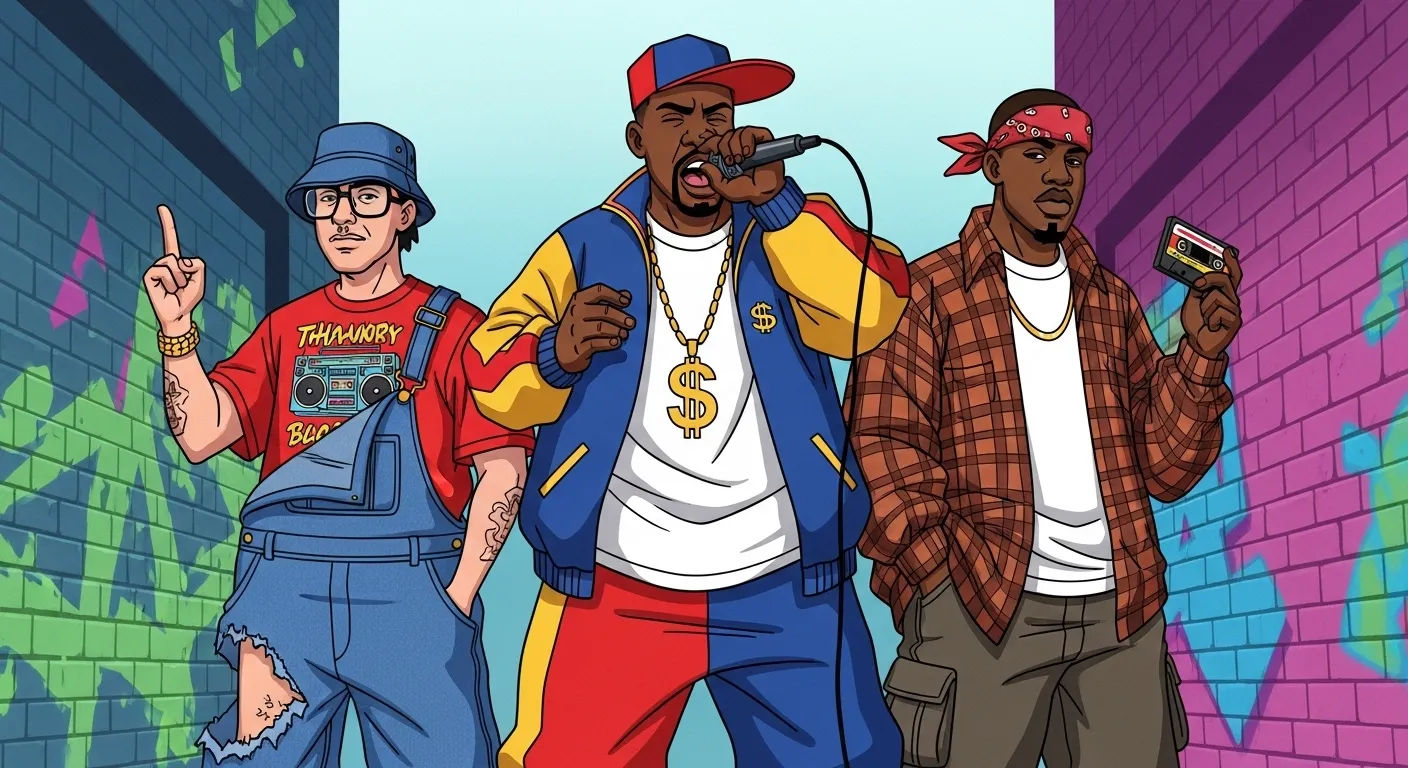
Yo, ever seen somebody stroll in like they just time-warped outta a Brooklyn basement cypher with a boombox slung over one shoulder and zero chill? That’s the 90s rappers style—where jeans weren’t just baggy, they were *shoutin’*, caps sat crooked like they skipped obedience school, and gold chains clanked like you just cashed your first platinum plaque. This wasn’t fashion for likes—it was street armor. Forget Paris runways; this drip was forged in block parties, subway graffiti sessions, and late-night freestyles under busted streetlights. From Bed-Stuy to South Central, every zip code had its own slang for swag—but the rules never changed: stay loose, stay loud, and never let ‘em catch you sweatin’, even if you’re spittin’ bars under three spotlights and two security cameras.
The Baggy Blueprint: Why Loose Fit Was King
Tight clothes? Man, that was the final boss nobody asked for. In the world of 90s rappers style, baggy wasn’t just preferred—it was sacred. We’re talkin’ JNCOs so wide you could smuggle a whole drum kit in one leg, or Tommy Hilfiger rugby shirts hangin’ off you like you just borrowed ‘em from your rich cousin’s closet. And nah, it wasn’t just for show—dancers needed room to moonwalk without split seams, MCs needed pockets deep enough for demo tapes and spare mic batteries, and everybody needed that “I didn’t try, but I still won” energy. Plus, real talk: those no-belt fits? They echoed the struggle—prison blues came without belts, so rockin’ ‘em free became a quiet middle finger to the system. In this game, “tight” meant stiff—and stiff don’t fly in the cipher.
Logomania and Brand Loyalty: When Labels Spoke Louder Than Lyrics
You didn’t need to hear a verse to know who your favorite rapper repped—just check the chest. FUBU (“For Us, By Us”) wasn’t just a tee; it was a whole damn movement stitched in cotton. Karl Kani? Cross Colours? Phat Farm? Those weren’t logos—they were loyalty oaths. Rockin’ Polo with the horse flipped upside down? You knew the code. Spot a Tommy windbreaker blaze past you on Lenox Ave? That dude’s certified G status. Rappers like Puff and Snoop weren’t just wearin’ threads—they built empires before “brand deal” was even a phrase. And don’t even get me started on Biggie in that Coogi sweater—man turned knitwear into liquid gold.
Accessories That Carried Weight: Chains, Watches, and More Bling
If your neck wasn’t jinglin’ like a slot machine at Caesar’s Palace, were you even in the game? In 90s rappers style, gold chains weren’t jewelry—they were receipts. Proof you’d leveled up from the stoop to the studio. Rolex Daytonas? Chunky pagers (yes, *pagers*)? Diamond grills? All trophies from the grind. Tupac’s bandana wasn’t just fabric—it was a flag of resilience. And shades? Dr. Dre’s Oakleys or Meth’s wraparounds weren’t just cool—they were part of the mystique. Every piece told a story: where you came from, how hard you fought, and how far you’d go. And honey, if your watch cost less than your first beater Impala, you weren’t playin’ 4D chess—you were just playin’ checkers at the park.
Footwear That Moved With the Beat: Sneaker Culture’s Golden Era
Kicks back then? Straight-up heirlooms. The 90s rappers style turned sneakers into holy relics. Air Jordans? Mandatory. Reebok Pumps? Legendary. Adidas Superstars gleamin’ under Harlem streetlights? Poetry in motion. Missy in her futuristic Adidas, Biggie in fresh white Js, Nas in clean Gazelles—every step dropped a bar. Sneaker culture blew up ‘cause rappers treated their feet like VIPs. And untied laces? That wasn’t lazy—that was *rebellion with rhythm*. You walked like the sidewalk owed you rent, and your soles whispered legends.

Headwear as Identity: Caps, Bandanas, and Durags
What you rocked on your dome said everything. New Era fitted tilted just right? East Coast royalty. Raiders snapback pulled low? West Coast solidarity. Bandana knotted tight? Thug life in color code. And durags? Don’t sleep—they weren’t just for waves; they were pride, ritual, and heritage rolled into one. In 90s rappers style, headwear was non-negotiable—it was your anthem before you even spit a line. Snoop’s blue do-rag? Jay-Z’s Yankees cap? Instant ID. And sideways? Always sideways. ‘Cause normal’s basic, and 90s hip-hop had zero patience for basic.
Color Palettes That Screamed Street Poetry
Pastels? Save ‘em for brunch in the Hamptons. 90s rappers style ran on red, black, and green—Afrocentric pride on full display. Navy and white for that Ivy League-meets-the-streets flex. Camo for tactical cool. Even all-black fits dripped menace (shoutout to Wu-Tang’s shadowy aura). Colors weren’t just pretty—they were statements. FUBU’s red-white-blue? A reclaiming of the flag. Tommy’s primary pops? Like comic books jumpin’ off the page. In this visual symphony, you didn’t *match*—you *harmonized* like a bassline and snare.
Gender Fluidity and Unapologetic Expression
Ladies didn’t just join the scene—they *owned* it. Missy in a trash-bag jumpsuit? Iconic. Lil’ Kim rockin’ pasties and fur? Fearless. Queen Latifah in locs and regal gowns? Straight-up queen energy. Female rappers didn’t copy the guys—they rewrote the rulebook. Crop tops with cargos, fur coats with combat boots, diamonds with denim—they mixed power with play like nobody’s business. Their 90s rappers style was armor, art, and attitude all in one. Hip-hop fashion wasn’t a boys’ club—it was a canvas, and they painted masterpieces while spittin’ bars that still hit harder than a bass drop.
Regional Flavors: How Geography Shaped the Look
From coast to coast, the 90s rappers style shifted like accents. East Coast? Timberlands, Carhartt, and crisp Polo buttoned to the top. West Coast? Khakis, white tees, Pendleton flannels tied ‘round the waist like a badge. Down South? Dickies, cowboy boots, and grillz before they went mainstream. Midwest kept it low-key but lethal—Common’s minimalist drip or Bone Thugs’ layered spiritual fits. This regional spice made the era rich and real. You heard a voice, and bam—you could *see* the outfit. Fashion wasn’t global—it was hyper-local, and that’s what gave it soul.
Legacy and Modern Echoes: Why 90s Rappers Style Still Rules
It’s 2026, and guess what? Kids are raiding Goodwill bins for vintage Tommy, stacking gold like it’s ‘95, and rockin’ flannels like they’re time travelers. The 90s rappers style never died—it just took a nap and woke up as “vintage cool.” Designers like Virgil Abloh and Kerby Jean-Raymond straight-up worship this era. TikTok’s full of Kangol hats and bucket silhouettes like it’s extra credit. But here’s the tea: today’s fits often miss the heart. Back then, oversized wasn’t just aesthetic—it was survival, identity, rebellion. Still, the blueprint lives on—‘cause real style ain’t about trends. It’s about truth. And if you wanna know where hip-hop fashion breathes? Trace it back to the 90s rappers style.
Wanna dive deeper? Start at the source: visit Raashan Net for the full archive. Explore the roots in our dedicated Rap section. Or geek out on visuals with our breakdown of A Tribe Called Quest Album Art: Creative Visions.
Frequently Asked Questions
How did rappers dress in the 90s?
Rappers in the 90s dressed in oversized clothing—baggy jeans, loose T-shirts, and long jerseys—often paired with bold accessories like gold chains, nameplate necklaces, and chunky sneakers. The 90s rappers style emphasized comfort, brand visibility (Tommy Hilfiger, FUBU, Karl Kani), and regional identity, whether through East Coast fitted caps or West Coast bandanas. Footwear like Air Jordans and Timberlands completed the look, making every outfit a statement of cultural pride and street authenticity.
What defined 90s hip-hop style?
The 90s rappers style was defined by its rejection of mainstream fashion norms in favor of self-expression rooted in urban experience. Key elements included loose-fitting garments, logo-heavy apparel, athletic wear as everyday attire, and accessories that signaled success and resilience. It wasn’t just clothing—it was a visual extension of hip-hop’s lyrical themes: struggle, triumph, community, and defiance. This era turned streetwear into high art and laid the groundwork for today’s global sneaker and streetwear industries.
What is rapper style called?
Rapper style is commonly referred to as "hip-hop fashion" or "streetwear," but during the golden era, it was simply known as keeping it real. The 90s rappers style specifically is now nostalgically labeled as “90s hip-hop fashion” or “golden age street style.” It’s characterized by its blend of athletic, workwear, and luxury elements—crafted not by designers, but by the streets themselves. So while there’s no single official term, fans and historians alike point to “90s rappers style” as the definitive phrase capturing that iconic aesthetic.
What is the 1990 style called?
The broader 1990s fashion includes grunge, minimalism, and preppy looks—but within hip-hop circles, the dominant aesthetic is unmistakably the 90s rappers style. While pop culture might remember flannel shirts and chokers, hip-hop’s contribution was louder, prouder, and more influential long-term. This specific sub-style doesn’t have a formal academic name, but in fashion discourse, it’s widely recognized as “90s hip-hop fashion” or simply “90s streetwear,” with rappers serving as its chief architects and ambassadors.
References
- https://www.vam.ac.uk/articles/hip-hop-fashion-history
- https://www.metmuseum.org/exhibitions/hip-hop-fashion-evolution
- https://www.britannica.com/art/hip-hop-culture/fashion
- https://www.schomburgcenter.org/hiphop-archive/style