A Track Cassette: Retro Audio for Vintage Vibes
- 1.
Ever Heard a Song on a Track Cassette and Felt Like Time Slowed Down?
- 2.
What Exactly Is a Track Cassette? Spoiler: It’s Not Just “Old Tech”
- 3.
The Great Confusion: What’s the Difference Between a Track and a Cassette?
- 4.
Why Did the 8-Track Fail? (And Why We Still Miss It)
- 5.
What Does an 8-Track Look Like? A Visual Guide to a Track Cassette Glory
- 6.
Are 8-Tracks Cassettes? Technically… Nope. But Culturally? Absolutely.
- 7.
Why Collect a Track Cassette in 2025? Because Algorithms Can’t Replace Soul
- 8.
Where to Find Authentic a Track Cassette Gear (Without Getting Played)
- 9.
Converting Your a Track Cassette to Digital? Do It Right.
- 10.
The Comeback: Why a Track Cassette Is Trending Again Among Gen Z
Table of Contents
a track cassette
Ever Heard a Song on a Track Cassette and Felt Like Time Slowed Down?
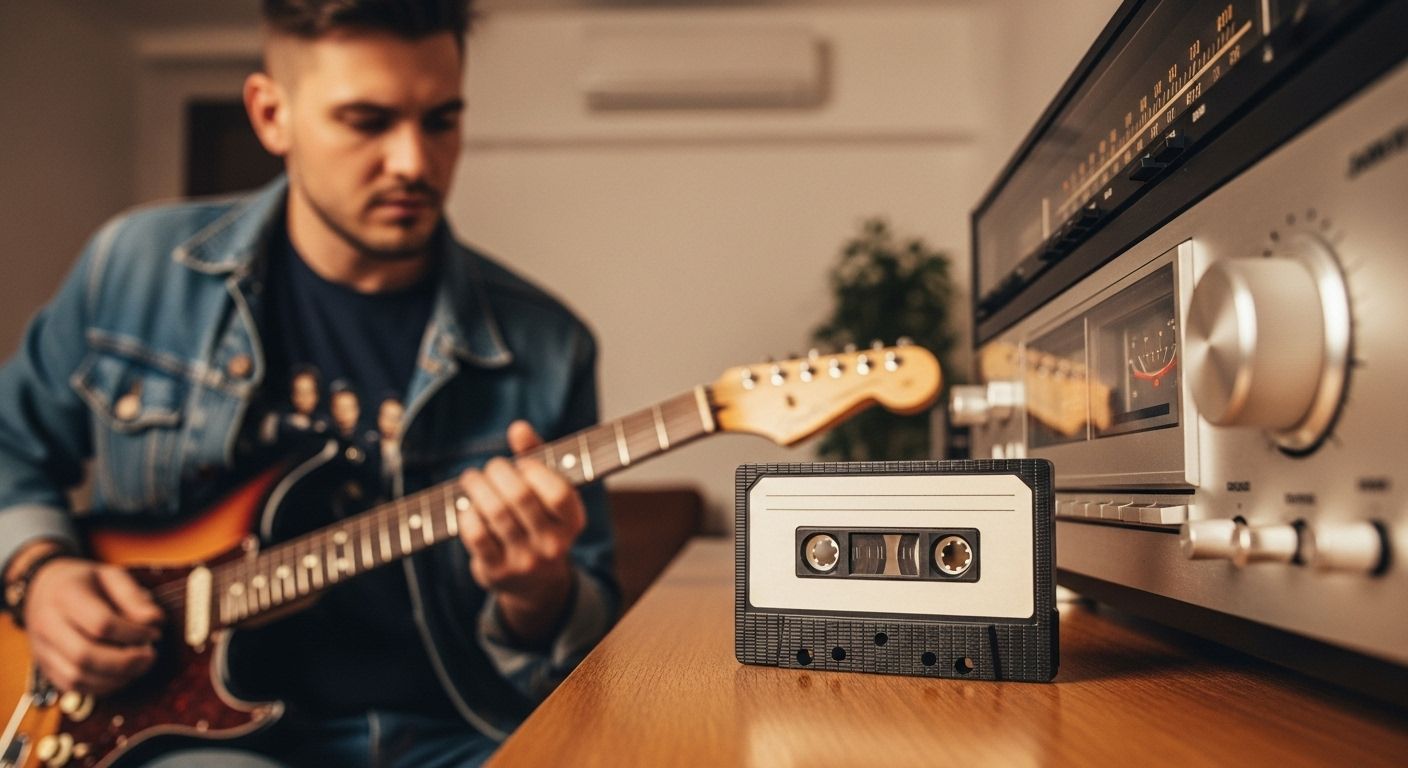
Yo, have you ever popped in an old a track cassette and suddenly—bam!—you’re 12 again, riding shotgun in your uncle’s pickup with the windows down and Waylon Jennings croonin’ like he knew your soul? That’s the magic of a track cassette. Not just music, but *memory* pressed into magnetic tape. Sure, Spotify’s slick, but it don’t got that warm hiss, that mechanical *clunk* when the tape flips, or that sweet panic when you gotta rewind with a pencil ‘cause the spool jammed. Nah, a track cassette ain’t obsolete—it’s nostalgic therapy with bass. And let’s be real: nothing hits quite like hearing Springsteen’s “Born to Run” crackle through a dusty deck in your dad’s garage while the cicadas scream outside. That’s not audio—that’s time travel.
What Exactly Is a Track Cassette? Spoiler: It’s Not Just “Old Tech”
Alright, let’s clear the fog. When folks say “a track cassette,” they’re usually mixin’ up two beasts: the 8-track tape and the compact cassette. Nope, they ain’t the same—though both ruled the analog airwaves like kings of the dashboard. The 8-track (or Stereo 8) was that clunky cartridge from the ‘60s–‘70s that slid into your El Camino like a sci-fi gadget from a drive-in flick. Compact cassettes? Smaller, sleeker, and you could toss ‘em in your backpack and roll to the skate rink. But here’s the kicker: neither is technically called “a track cassette”—that’s just street slang, baby. Still, when you’re diggin’ through bins at a flea market in Austin yellin’ “Yo, got any a track cassette?”—vendors know you mean vintage audio gold, not some dusty VHS.
The Great Confusion: What’s the Difference Between a Track and a Cassette?
Let’s break it down like a busted boombox:
| Feature | 8-Track (Stereo 8) | Compact Cassette |
|---|---|---|
| Release Era | 1965–1983 | 1963–2000s+ |
| Tape Loop | Continuous loop (no rewind) | Two spools (rewind/fast-forward) |
| Programs | 4 programs (8 tracks total) | 2 sides (A/B) |
| Sound Quality | Muffled, frequent wow/flutter | Warmer, more consistent |
| Portability | Bulky, mostly car/home use | Fits in your pocket |
So when someone asks, “What’s the diff?”—now you got the receipts. And no, a track cassette ain’t one thing. But whether it’s an 8-track of Fleetwood Mac’s *Rumours* or a mixtape labeled “DO NOT ERASE ❤️” from your first crush in 10th grade, both fall under that hazy, lovable umbrella of a track cassette culture. It’s less about specs and more about soul, y’know?
Why Did the 8-Track Fail? (And Why We Still Miss It)
Man, the 8-track had swagger—but it also had flaws bigger than a Texas hat. The tape would *constantly* jam mid-song, right when the guitar solo kicked in. Switching “programs” meant you’d get dumped into the middle of another track like you walked into the wrong bar. And that splice? The spot where the loop joined? It’d go *ker-thunk* right during the quiet part of “Hotel California.” Oof. By the late ‘70s, compact cassettes offered better sound, rewinding, and—crucially—portability. Sony’s Walkman buried the 8-track faster than a secret in a small town. But hey, failure don’t mean forgotten. Today, collectors in Nashville and Seattle pay $40–$100 USD for mint-condition a track cassette 8-tracks of rare albums. Irony? The very flaws we cursed now feel like *character*—like your grandpa’s old pickup that only starts if you tap the carburetor just right.
What Does an 8-Track Look Like? A Visual Guide to a Track Cassette Glory
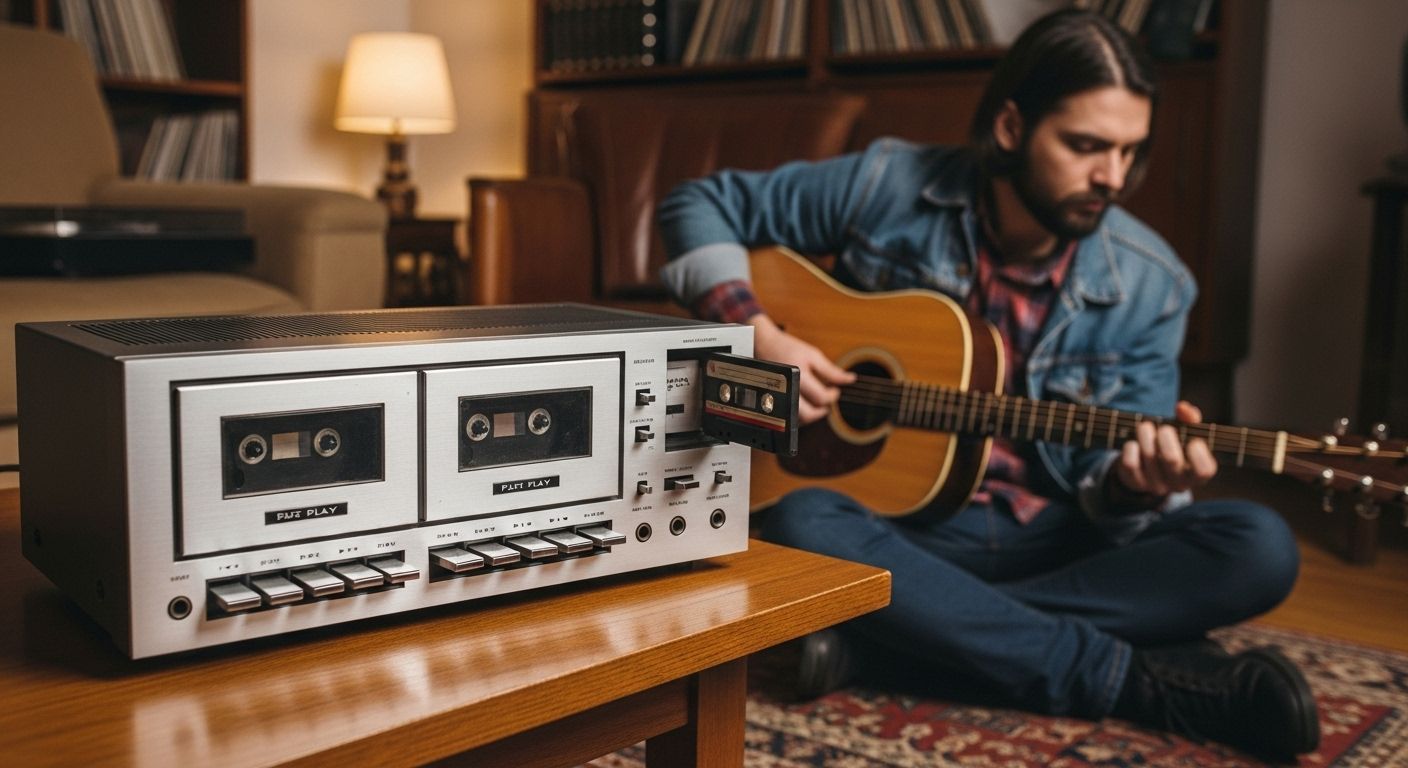
Picturin’ a track cassette but your brain’s fuzzy? Imagine a plastic brick—about the size of a deck of cards—usually brown or black, with a wide tape window on top and a metal pressure pad underneath. The front has a slot where the playback head dives in, and inside? A single endless loop of ¼-inch tape wrapped around a single hub. No reels visible—just mystery. Unlike compact cassettes with their delicate doors and dual spools, the 8-track screams “I was built for muscle cars and AM radio.” And honestly? It kinda looks like a relic from a retro-futuristic dream—like something Doc Brown would’ve wired into the DeLorean. That’s the charm of a track cassette—even its ugliness is beautiful, like a well-worn baseball glove.
Are 8-Tracks Cassettes? Technically… Nope. But Culturally? Absolutely.
Here’s the tea: engineers will side-eye you if you call an 8-track a “cassette.” True cassettes use two spools and a protective shell that opens during playback. 8-tracks? One loop, one shell, no opening mechanism. But in the wild—in thrift stores in Portland, garage sales in St. Louis, and late-night eBay hunts—folks lump ‘em together under “a track cassette” because, emotionally, they serve the same purpose: analog nostalgia. And let’s be real—when your grandpa says, “Back in my day, we listened to music on a track cassette,” he ain’t splitin’ hairs. He’s rememberin’ Friday nights with the radio cranked and the world feelin’ wide open.
Why Collect a Track Cassette in 2025? Because Algorithms Can’t Replace Soul
In a world of AI-curated playlists and 320kbps perfection, a track cassette is rebellion. It’s tactile. It’s imperfect. It demands your attention—no skipping, no scrubbing, just *listening*. Plus, there’s serious value. Rare pressings of Pink Floyd or Johnny Cash on 8-track fetch $150+ USD from serious collectors. And compact cassettes? Artists like Taylor Swift and Olivia Rodrigo now release *exclusive* cassette editions that sell out in minutes—Gen Z’s way of saying “I want something real.” Collecting a track cassette isn’t hoarding junk—it’s preserving culture. And if you’re lucky, you’ll find a mixtape with someone’s handwriting on it… and suddenly, you’re part of their story, like finding a love letter in a library book.
Where to Find Authentic a Track Cassette Gear (Without Getting Played)
Look, not every “vintage” a track cassette on Etsy is legit. Some are reissues. Some are junk wrapped in nostalgia bait. To score real-deal gear:
- Hit up local record fairs—ask for “8-track or cassette players in working order”
- Check Audio section on Raashan for verified seller tips
- Avoid listings with “tested” but no audio sample—big red flag
- For players, brands like Panasonic, Technics, and Realistic are gold
And pro move? Bring a known-working a track cassette to test any player before you buy. ‘Cause nothin’ hurts worse than haulin’ home a “mint” 8-track deck from a yard sale in Phoenix… only to find out it eats tapes like popcorn at a horror flick.
Converting Your a Track Cassette to Digital? Do It Right.
Got a box of old tapes? Don’t just shove ‘em in a drawer like last year’s tax returns. Digitize ‘em! But skip the $20 USB “cassette converter” from Amazon—it sounds like your dog barkin’ through a tin can. Instead, use a decent tape deck, a clean head, and Audacity (free software). Record at 24-bit/48kHz, clean the hiss gently with noise reduction, and save as FLAC for archive quality. For full walkthroughs, peep our deep dive: Converting Cassette to Digital Easy Steps. Your future self—and your grandkids—will thank you. After all, that a track cassette of your mom singin’ lullabies? That’s heirloom stuff, worth more than gold.
The Comeback: Why a Track Cassette Is Trending Again Among Gen Z
Wild, right? Kids who’ve never seen a landline are now huntin’ for a track cassette like it’s crypto. Why? Because analog = authenticity in a filtered, AI-everything world. TikTok’s flooded with #cassetterevival clips—teens unboxing Prince tapes, building DIY 8-track shelves out of pallets, even sampling tape hiss into lo-fi beats that get millions of plays. Brands like Urban Outfitters now stock blank cassettes ($12.99 USD), and indie bands press limited runs ‘cause “vinyl’s too expensive, but cassettes? That’s punk.” So yeah—a track cassette ain’t dead. It’s just been waitin’ for a new generation to press play… and maybe fall in love with imperfection all over again.
Frequently Asked Questions
What is the difference between a track and a cassette?
The term “track” usually refers to the 8-track tape system, which uses a continuous loop of tape divided into 4 programs (8 tracks total). A cassette—specifically the compact cassette—uses two spools and two sides (A/B). While both are magnetic tape formats, they’re mechanically different. However, in casual conversation, many people use “a track cassette” to describe either format due to their shared retro appeal.
Are 8-tracks cassettes?
Technically, no. 8-tracks and compact cassettes are distinct formats. But culturally and colloquially, they’re often grouped under the nostalgic umbrella of “a track cassette” by collectors, music lovers, and vintage enthusiasts who value their shared role in pre-digital music history.
Why did the 8-track fail?
The 8-track failed due to mechanical flaws: frequent tape jams, poor sound quality, inability to rewind, and disruptive program changes. Compact cassettes offered better portability, rewinding, and fidelity, leading to the 8-track’s decline by the early 1980s. Still, a track cassette like the 8-track remains a beloved collector’s item for its historical charm.
What does 8tracks look like?
An 8-track cartridge is a rectangular plastic shell (about 5.5 x 4 x 0.8 inches) with a wide tape window on top, a metal pressure pad underneath, and a single internal tape loop. It lacks reels and doesn’t open during playback. Unlike sleek compact cassettes, the 8-track looks bulky and industrial—classic “dashboard tech” from the 1970s. This distinct design is a key part of a track cassette nostalgia.
References
- https://www.loc.gov/preservation/care/tape.html
- https://museumofobsoletemedia.org/8-track-cartridge/
- https://www.audiomuseum.org/tape_formats_comparison.pdf
- https://www.billboard.com/music/music-news/cassette-tape-sales-rise-2024-1235789012/
- https://www.vintagerecording.org/8track-history-and-technology