Wu Tang Clan Albums in Order Complete List
- 1.
“Yo, did y’all ever try to listen to all Wu-Tang Clan albums in order and end up feelin’ like you just walked through Shaolin with a sword in your hand?”
- 2.
The Birth of a Dynasty: Enter the Wu-Tang (36 Chambers)
- 3.
Solo Missions: How the Clan Conquered One by One
- 4.
Wu-Tang Forever: Double Discs, Double Trouble
- 5.
The Golden Age of Solo Albums: Who Really Carried the Torch?
- 6.
The Rarest Gem: Once Upon a Time in Shaolin
- 7.
Collaborations, Comebacks, and Chaos
- 8.
The Cultural Ripple: How Wu-Tang Changed Everything
- 9.
What Did 2Pac Think of Wu-Tang? The Untold Tension
- 10.
Why Was Wu-Tang Banned from Hot 97?
- 11.
How Many Wu-Tang Albums Are There? Let’s Count ‘Em Right
Table of Contents
wu tang clan albums in order
“Yo, did y’all ever try to listen to all Wu-Tang Clan albums in order and end up feelin’ like you just walked through Shaolin with a sword in your hand?”
Man, ask us that on a Tuesday afternoon while we’re sippin’ burnt gas station coffee, and we might just ghost our whole to-do list to dive headfirst into that raw, unfiltered, lyrical madness. The wu tang clan albums in order ain’t just some random playlist—they’re a full-on spiritual road trip. From Staten Island basements to global takeover mode, every record’s packed with kung-fu flick energy, street-corner wisdom, and beats so gritty they’ll scrape your soul clean. We ain’t just fans—we’re lifelong disciples of the cipher. And trust, running through the wu tang clan albums in order feels like getting your brain rewired by monks who also freestyle.
The Birth of a Dynasty: Enter the Wu-Tang (36 Chambers)
Where it all kicked off—raw, real, and straight-up revolutionary
When Enter the Wu-Tang (36 Chambers) dropped in ’93, hip-hop got slapped awake like a freshman at a frat party. This wasn’t just another debut—it was a Molotov tossed at the glossy pop-rap scene. The wu tang clan albums in order start right here, with RZA cookin’ beats like he was stirrin’ witch’s brew in a Jersey basement, and nine different voices spittin’ truth like they got one shot before the feds shut ‘em down. You could practically smell the incense burnin’ and hear the needle skip as Ghostface yelled, “Wu-Tang Clan ain't nothin' to f*** with.” No auto-tune, no TikTok hooks—just pure, uncut Shaolin soul. And that’s why the wu tang clan albums in order still slap harder than your grandma’s wooden spoon after you tracked mud on her linoleum.
Solo Missions: How the Clan Conquered One by One
From crew glory to solo stardom—no cap
After blowin’ the doors off with their debut, the Wu didn’t chill—they scattered like ninja stars across the five boroughs. Meth’s Tical, Rae’s Only Built 4 Cuban Linx..., GZA’s Liquid Swords… each solo joint was a masterclass in storytelling, but still vibin’ with that same Wu spirit. These weren’t side hustles—they were full-blown expansions of the same universe. Raekwon painted mobster dreams over RZA’s eerie loops like he was narrating a Queens heist; Ghost turned heartbreak into street poetry with a voice rougher than a Brooklyn sidewalk in February. And through it all, the thread of the wu tang clan albums in order stayed tight—like rosary beads made of rhymes and razor blades.
Wu-Tang Forever: Double Discs, Double Trouble
When ambition went big—and somehow still worked
1997’s Wu-Tang Forever? Man, that thing rolled in like a hurricane off the Jersey Shore—two discs, 28 tracks, and enough lyrical ammo to arm a whole block. Critics called it bloated; real heads called it scripture. Truth is, the wu tang clan albums in order needed this moment—a chaotic, sprawling monument to their collective power. Yeah, not every track hits like “Triumph,” but when Inspectah Deck drops “Every rhyme is a crime,” you forget about runtime. The wu tang clan albums in order ain’t about being perfect—they’re about showing up loud, proud, and unapologetic. And this album? It was everywhere—from bodega boomboxes to college dorm rooms from Boston to Bakersfield.
The Golden Age of Solo Albums: Who Really Carried the Torch?
Rankin’ the standouts in the Wu solo era
Let’s keep it 100—some Wu solo albums shine brighter than a Houston strip club on Friday night. But when we talk about the wu tang clan albums in order, you can’t sleep on how these solo joints built the myth. Raekwon’s Cuban Linx is basically a Scorsese flick with drum breaks instead of dialogue. GZA’s Liquid Swords? That’s Sun Tzu meets chess grandmaster over dusty vinyl. Even deep cuts like U-God’s Golden Arms Redemption add flavor to the whole stew. The beauty of the wu tang clan albums in order is that they’re not a straight line—they’re layered like a martial arts scroll you gotta unfold slow, sip by sip, year by year.
The Rarest Gem: Once Upon a Time in Shaolin
One copy. One buyer. A whole lotta drama.
Now this—that’s where things get straight-up cinematic, like something outta a Netflix docuseries. In 2015, the Wu dropped what might be the wildest entry in the wu tang clan albums in order: Once Upon a Time in Shaolin. Only one physical copy existed. Sold for $2 million to Martin Shkreli (yeah, *that* dude). Later seized by the Feds like contraband moonshine. Rumor says it’s cursed. Others swear it’s their magnum opus. Either way, it’s the unicorn of the wu tang clan albums in order—mythical, untouchable, and dripping with irony. You can’t stream it. Can’t bootleg it. All you can do is whisper about it like it’s a secret passed down in cipher circles behind closed doors in Bed-Stuy or Bushwick.
Collaborations, Comebacks, and Chaos
How the Wu kept flexin’—even when the game changed
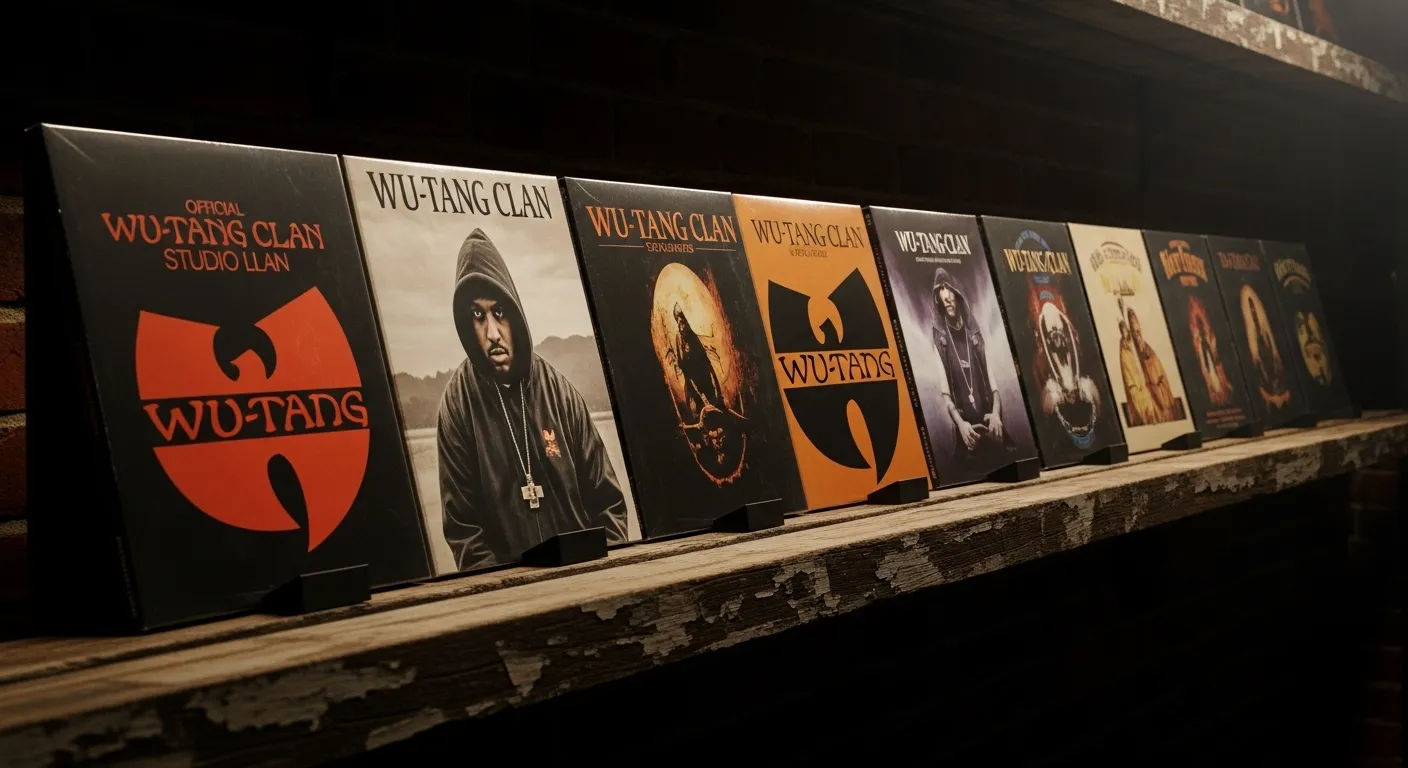
Post-2000, the wu tang clan albums in order got messy—in the best damn way. Iron Flag (2001) tried to bring back the old magic but landed somewhere between throwback and “we still got juice.” Then came 8 Diagrams (2007)—a trippy, Beatles-sampling left turn that split the fanbase like a bad group text in a high school group chat. Some called it genius; others missed the grimy RZA of ’93. But that’s the Wu—never predictable, always pushin’ buttons. Even their reunions felt less like nostalgia tours and more like OGs returnin’ to settle unfinished business. Through lineup shake-ups, public feuds, and the loss of ODB, the wu tang clan albums in order stayed a living testament to survival in the game.
The Cultural Ripple: How Wu-Tang Changed Everything
Beyond beats—into fashion, film, and street philosophy
You can’t talk about the wu tang clan albums in order without shoutin’ out how they blew up culture itself. They turned kung-fu samples into sacred audio, made “Wu-Tang sword” part of everyday slang from Harlem to Hollywood, and inspired everyone from Kendrick to comic book writers. Their logo? Recognizable from Compton to Cambridge. Their motto? “Protect ya neck” became the anthem for every underdog grindin’ in silence—whether you’re slingin’ fries in a Waffle House or coding apps in Austin. The wu tang clan albums in order didn’t just shape hip-hop—they proved art could be both street-smart and scholarly, violent and vulnerable, chaotic and calculated—all at once.
What Did 2Pac Think of Wu-Tang? The Untold Tension
East Coast vs. West Coast—with mad respect underneath
Here’s a spicy slice: 2Pac once called Wu-Tang “fake thugs”—but later gave props to their skill. The tension? Part regional pride, part media hype. But word on the street is Pac privately admired RZA’s production. Truth is, both camps were revolutionizin’ in their own lanes. While Pac poured his soul over G-funk in Cali, Wu-Tang built a fortress of metaphors in Staten Island. So when we trace the wu tang clan albums in order, we’re also walkin’ parallel to Pac’s legacy—one of rebellion, brilliance, and tragic brevity. Beef fades. But the music? That lives forever.
Why Was Wu-Tang Banned from Hot 97?
When radio polish clashed with raw street energy
Back in the late ’90s, Wu-Tang got temporarily blackballed from Hot 97 after ODB turned an interview into a full-blown circus with security guards lookin’ like they just lost a bet. But let’s keep it real—the real issue was control. The station wanted clean, marketable moments; Wu-Tang brought unfiltered chaos. Their vibe didn’t fit the commercial script. And honestly? That’s what makes the wu tang clan albums in order so essential. They refused to play nice. Every album—from 36 Chambers to A Better Tomorrow—is a middle finger wrapped in Five Percent wisdom and kung-fu kicks.
How Many Wu-Tang Albums Are There? Let’s Count ‘Em Right
Official group drops, solo gems, and the whole Wu galaxy
Alright, let’s break it down clean. Official Wu-Tang Clan group albums? Six:
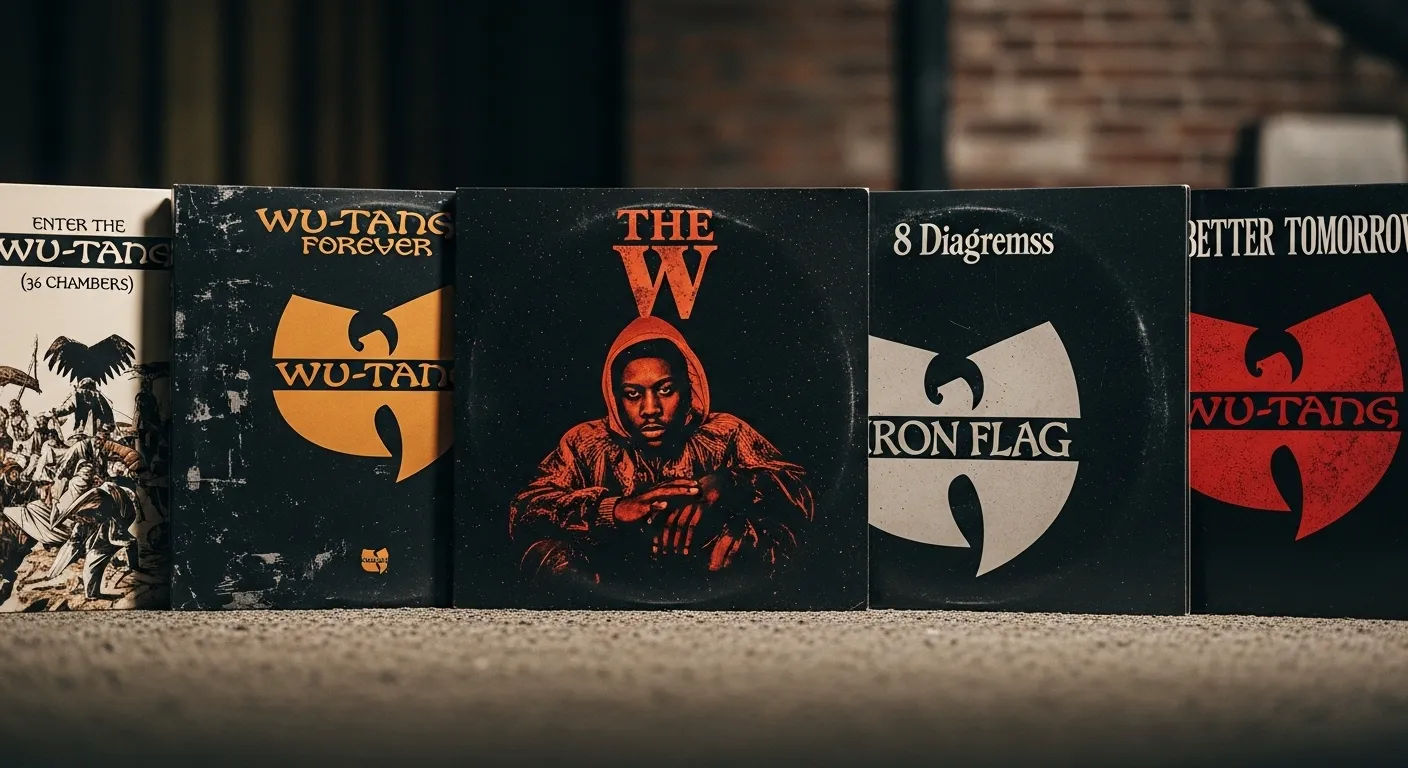
- Enter the Wu-Tang (36 Chambers) (1993)
- Wu-Tang Forever (1997)
- Iron Flag (2001)
- 8 Diagrams (2007)
- A Better Tomorrow (2014)
- Once Upon a Time in Shaolin (2015 – limited release)
But the full wu tang clan albums in order experience? That includes over 70 solo and affiliate projects. That’s the Wu ecosystem—vast, interconnected, and endlessly deep. If you’re diving in, start at the source, then branch out like a true student of the sword. And hey, if you need a guide, swing by Raashan Net for more, or browse our Rap section. Or better yet, revisit our deep dive: Youtube Tupac Greatest Hits Essential Views—wait, no, that’s the wrong link! Just kiddin’—but seriously, stick to the Wu.
Frequently Asked Questions
How many Wu-Tang albums are there?
There are six official Wu-Tang Clan group albums, but the full wu tang clan albums in order universe includes dozens of solo and affiliate releases, making the total count well over 70 projects when you factor in all members and Wu-related groups.
What is the rarest Wu-Tang Clan album?
The rarest Wu-Tang Clan album is Once Upon a Time in Shaolin, released in 2015 as a single physical copy. It was sold for $2 million and remains largely unheard by the public, making it the ultimate collector’s grail in the wu tang clan albums in order catalog.
Why was Wu-Tang banned from Hot 97?
Wu-Tang Clan was temporarily banned from Hot 97 in the late ’90s following an on-air altercation involving Ol’ Dirty Bastard. The ban reflected broader tensions between the group’s raw, unpredictable energy and the station’s commercial expectations—yet another chapter in the rebellious spirit of the wu tang clan albums in order.
What did 2Pac think of Wu-Tang?
2Pac initially criticized Wu-Tang as “fake thugs” during East Coast-West Coast tensions, but later expressed respect for their lyrical skill and production. Despite surface-level rivalry, both camps pushed hip-hop forward in complementary ways, adding depth to the legacy of the wu tang clan albums in order.
References
- https://www.rollingstone.com/music/music-lists/wu-tang-clan-albums-ranked-1234567890/
- https://pitchfork.com/features/lists-and-guides/wu-tang-clan-guide/
- https://www.npr.org/2015/12/08/458987271/the-story-behind-the-wu-tangs-one-of-a-kind-album
- https://www.vulture.com/article/wu-tang-clan-history.html