All Mf Doom Albums Essential Collection
- 1.
The Villainous Persona: Understanding MF DOOM's Masked Identity
- 2.
Operation: Doomsday - The Album That Started It All
- 3.
Take Me to Your Leader: King Geedorah's Cosmic Invasion
- 4.
Vaudeville Villain: Viktor Vaughn's Time-Traveling Tale
- 5.
MM..FOOD: The Album That Proved DOOM Could Go Mainstream (If He Wanted To)
- 6.
Madvillainy: The Collaboration That Changed Underground Hip-Hop Forever
- 7.
The Mouse and the Mask: DOOM Joins Forces with Danger Mouse
- 8.
Born Like This: DOOM's Late-Career Masterpiece
- 9.
Collaborative Projects: When DOOM Shared the Spotlight
- 10.
The Legacy: Why All MF DOOM Albums Matter in 2026
Table of Contents
all mf doom albums
The Villainous Persona: Understanding MF DOOM's Masked Identity
Before we even crack open the vault of all mf doom albums, we gotta talk about the elephant in the room—or should we say, the supervillain in the mask. Daniel Dumile didn't just create MF DOOM as a stage name; he built an entire mythology around this metal-faced antihero. The mask wasn't just a gimmick—it was a statement. A rejection of hip-hop's obsession with celebrity and image. When DOOM rocked that silver mask, he wasn't just hiding his face; he was forcing you to listen to the words, not the man. That commitment to character is what makes exploring all mf doom albums feel like uncovering chapters in some cosmic comic book where every verse is a plot twist and every beat is a battle scene.
Operation: Doomsday - The Album That Started It All
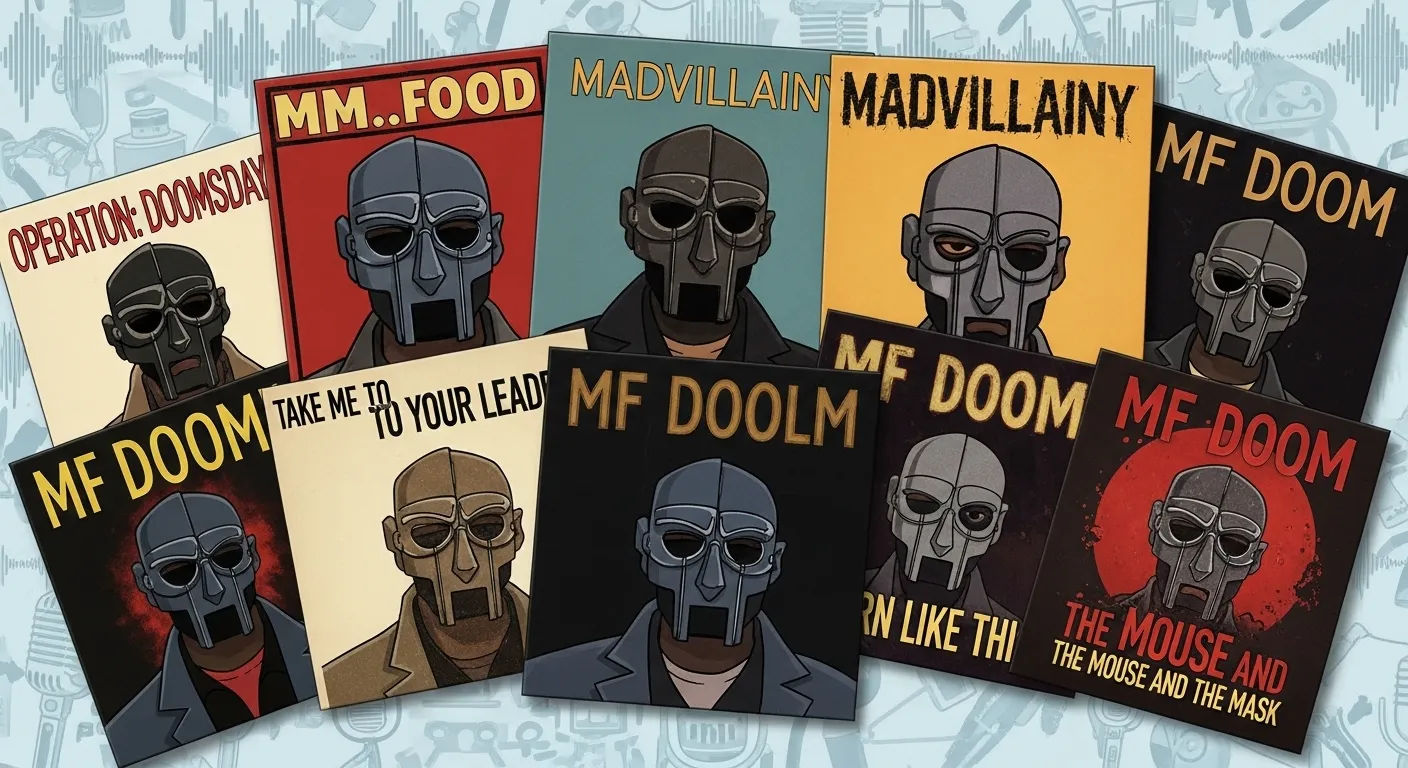
Let's rewind to 1999, when the world was still recoverin' from Y2K panic and MF DOOM dropped Operation: Doomsday like a time bomb wrapped in nostalgia. This wasn't just another underground rap album—it was a declaration of independence from everything hip-hop had become. The production? Sample-heavy, lo-fi, and drenched in that late-'90s NYC basement vibe. The lyrics? Dense, intricate, and packed with references that'd make your English professor blush. Tracks like "Doomsday" and "Rhymes Like Dimes" established the blueprint for what would become all mf doom albums—complex rhyme schemes wrapped in villainous charm. The album's cover alone, with DOOM's mask photoshopped onto a cartoon villain, told you everything you needed to know: this wasn't your typical rap record.
Take Me to Your Leader: King Geedorah's Cosmic Invasion
Now here's where things get weird—in the best possible way. In 2003, DOOM dropped Take Me to Your Leader under the alias King Geedorah, a three-headed monster from Godzilla lore. Why? Because DOOM could. This album was his version of a concept record, where he mostly produced tracks and let other MCs handle the verses, only occasionally stepping in with his signature flow. The result? A psychedelic trip through DOOM's production genius that feels like it was beamed in from another dimension. When you're cataloging all mf doom albums, this one stands out as the wildcard—the project that proves DOOM was never content to just be a rapper; he was a world-builder, a sonic architect constructing entire universes one beat at a time.
Vaudeville Villain: Viktor Vaughn's Time-Traveling Tale
Speaking of aliases, let's talk about Viktor Vaughn and Vaudeville Villain, another 2003 release that added another layer to the DOOM mythology. This time, DOOM created a character from the future who gets sent back to the '90s, and the album plays out like a sci-fi noir where every track is a scene in this time-traveling drama. The production is grittier, the storytelling more linear, but the wordplay? Still razor-sharp. What makes all mf doom albums so fascinating is how each persona allowed DOOM to explore different facets of his artistry—King Geedorah was the producer, Viktor Vaughn was the storyteller, and MF DOOM was the supervillain poet. It's like he had multiple personalities, and each one was a lyrical savant.
MM..FOOD: The Album That Proved DOOM Could Go Mainstream (If He Wanted To)
Released on the same day as Madvillainy in 2004, MM..FOOD was DOOM's way of showing he could craft a cohesive, accessible album without sacrificing his signature complexity. The title? A palindrome, of course—because DOOM loved wordplay almost as much as he loved villainy. This album feels like the culmination of everything he'd been building toward, with tracks like "Deep Fried Frenz" and "Potholderz" showcasing his ability to balance intricate rhymes with undeniable grooves. When you're working your way through all mf doom albums, MM..FOOD stands as the perfect entry point for newcomers—it's DOOM at his most refined, still weird but weird in a way that makes you wanna come back for more.
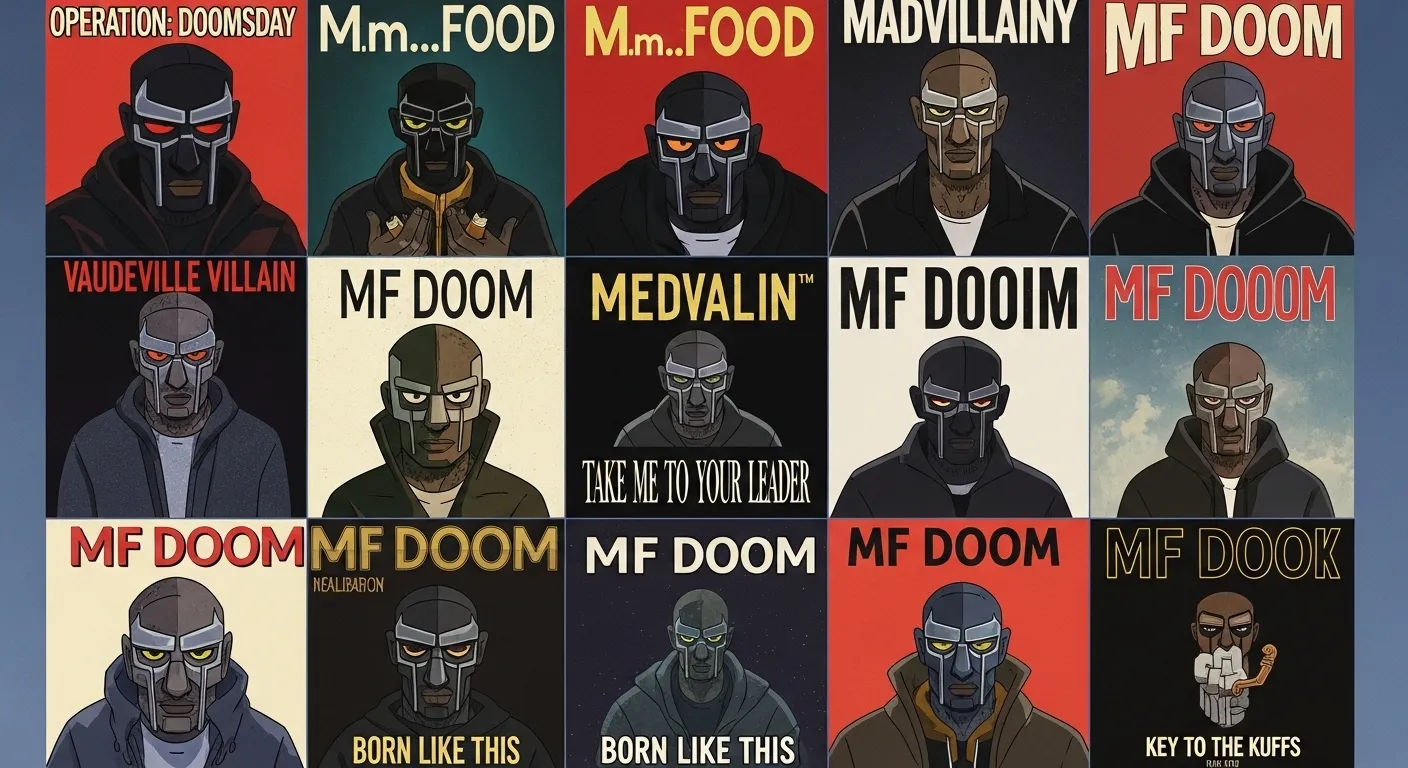
Madvillainy: The Collaboration That Changed Underground Hip-Hop Forever
Let's get one thing straight: Madvillainy isn't just one of the greatest MF DOOM albums—it's one of the greatest hip-hop albums, period. When DOOM teamed up with Madlib in 2004, they created something that felt like it was beamed in from an alternate universe where rap was still an art form, not just a commodity. Fourteen tracks, no filler, just pure uncut hip-hop alchemy. Songs like "Accordion" and "All Caps" became instant classics, and the album's influence can still be felt today in everything from Earl Sweatshirt to JPEGMAFIA. If you're exploring all mf doom albums and you skip Madvillainy, you're like someone tryin' to understand Shakespeare without readin' Hamlet—it just ain't gonna work.
The Mouse and the Mask: DOOM Joins Forces with Danger Mouse
2005 brought us The Mouse and the Mask, a collaboration with Danger Mouse that somehow managed to be both critically acclaimed and genuinely fun. The album features guest appearances from Cartoon Network's Adult Swim characters, which sounds like a recipe for disaster but somehow works brilliantly. Tracks like "Sofa King" and "Old School" showcase DOOM's ability to adapt his style to different production while never losing his essence. What's fascinating about all mf doom albums is how each collaboration reveals a different side of his artistry—Madvillainy was psychedelic, The Mouse and the Mask was playful, but both are unmistakably DOOM.
Born Like This: DOOM's Late-Career Masterpiece
Fast forward to 2009, and DOOM dropped Born Like This, an album that proved he wasn't just resting on his legacy. The title comes from a Charles Bukowski poem, which tells you everything you need to know about DOOM's literary influences. This album is darker, more introspective, and features some of his most technically impressive rapping. Tracks like "Gazzillion Ear" and "Batty Boyz" show an artist still pushing himself creatively, still finding new ways to twist language into shapes that shouldn't be possible. When you're cataloging all mf doom albums, Born Like This stands as evidence that DOOM's genius only deepened with time.
Collaborative Projects: When DOOM Shared the Spotlight
Here's the thing about MF DOOM—he was a team player when he wanted to be. Beyond the major collaborations we've already mentioned, DOOM worked with everyone from Ghostface Killah (Swift & Changeable) to Jneiro Jarel (Key to the Kuffs under the JJ DOOM alias). Each project brought out different aspects of his artistry, whether it was the gritty street tales with Ghostface or the experimental soundscapes with Jarel. The beauty of exploring all mf doom albums is discovering how DOOM could adapt to different musical contexts while always maintaining his unique voice. He was like a jazz musician who could sit in with any band and immediately make it sound like his own.
The Legacy: Why All MF DOOM Albums Matter in 2026
So here we are in 2026, years after DOOM's passing, and his music still feels fresh, still feels vital. That's the mark of a true artist—their work transcends time. When you listen to all mf doom albums in sequence, you're not just hearing the evolution of a rapper; you're witnessing the development of a poet, a producer, a mythmaker. His influence can be heard in artists from Kendrick Lamar to Tyler, the Creator, all of whom learned from DOOM's example that hip-hop could be literary, could be complex, could be art. If you're just gettin' into DOOM's catalog, we'd recommend startin' with Raashan for more hip-hop deep dives, checkin' out our Rap section for artist profiles, or readin' our breakdown of the Best Lupe Fiasco Album Top Release for another underground legend's discography.
Frequently Asked Questions
How many MF DOOM albums are there?
Counting all MF DOOM albums including solo releases, collaborative projects, and albums under his various aliases (King Geedorah, Viktor Vaughn, JJ DOOM), there are approximately 15-20 official full-length albums. This includes major works like Operation: Doomsday, Madvillainy, MM..FOOD, and collaborative efforts with artists like Madlib and Danger Mouse. The exact number depends on how you categorize EPs and posthumous releases.
Who has the #1 selling album of all time?
Michael Jackson's Thriller holds the title for the #1 selling album of all time with estimated sales of over 70 million copies worldwide. While MF DOOM's albums never reached those commercial heights, his influence on underground hip-hop and alternative rap is immeasurable. The cultural impact of all mf doom albums far exceeds their sales figures, making him one of hip-hop's most respected artists despite his underground status.
Is MF DOOM part of Gorillaz?
MF DOOM was not an official member of Gorillaz, but he did collaborate with them on the track "November Has Come" from their 2005 album Demon Days. This collaboration made perfect sense given Gorillaz's animated aesthetic and DOOM's masked persona. While he wasn't part of the core Gorillaz lineup, this feature remains one of the standout moments in both all mf doom albums catalog and Gorillaz's discography, showcasing DOOM's ability to adapt his style to different musical contexts.
Is MF DOOM an OG?
Absolutely—MF DOOM is considered one of the most influential OGs in underground hip-hop. His career spanned from the late 1980s with KMD through his solo work starting in the late 1990s, influencing generations of rappers with his complex lyricism and unique approach to the genre. The entire collection of all mf doom albums represents a masterclass in independent artistry, proving that commercial success isn't necessary for legendary status in hip-hop culture.
References
- https://pitchfork.com/reviews/albums/madvillainy/
- https://www.rollingstone.com/music/music-lists/best-mf-doom-songs-1234567890/
- https://www.npr.org/2020/10/31/929579767/mf-doom-remembering-hip-hops-villainous-genius
- https://www.complex.com/music/mf-doom-discography-ranked